Compound vs polish, what is the difference?
Compound is the aggressive abrasive that cuts fast to remove heavy defects like deep swirls and oxidation, but leaves a light haze. Polish is the fine abrasive that removes that haze and restores full gloss and clarity. In multi-stage correction you compound first to cut, then polish to refine, in that order.
- Compound cuts hard and fast to remove heavy defects, but leaves micro-haze.
- Polish is fine and refines the finish, removing haze and restoring gloss.
- Order matters: compound first to cut, polish second to refine.
- Single-stage products blend both, which is why single stage removes less than multi stage.
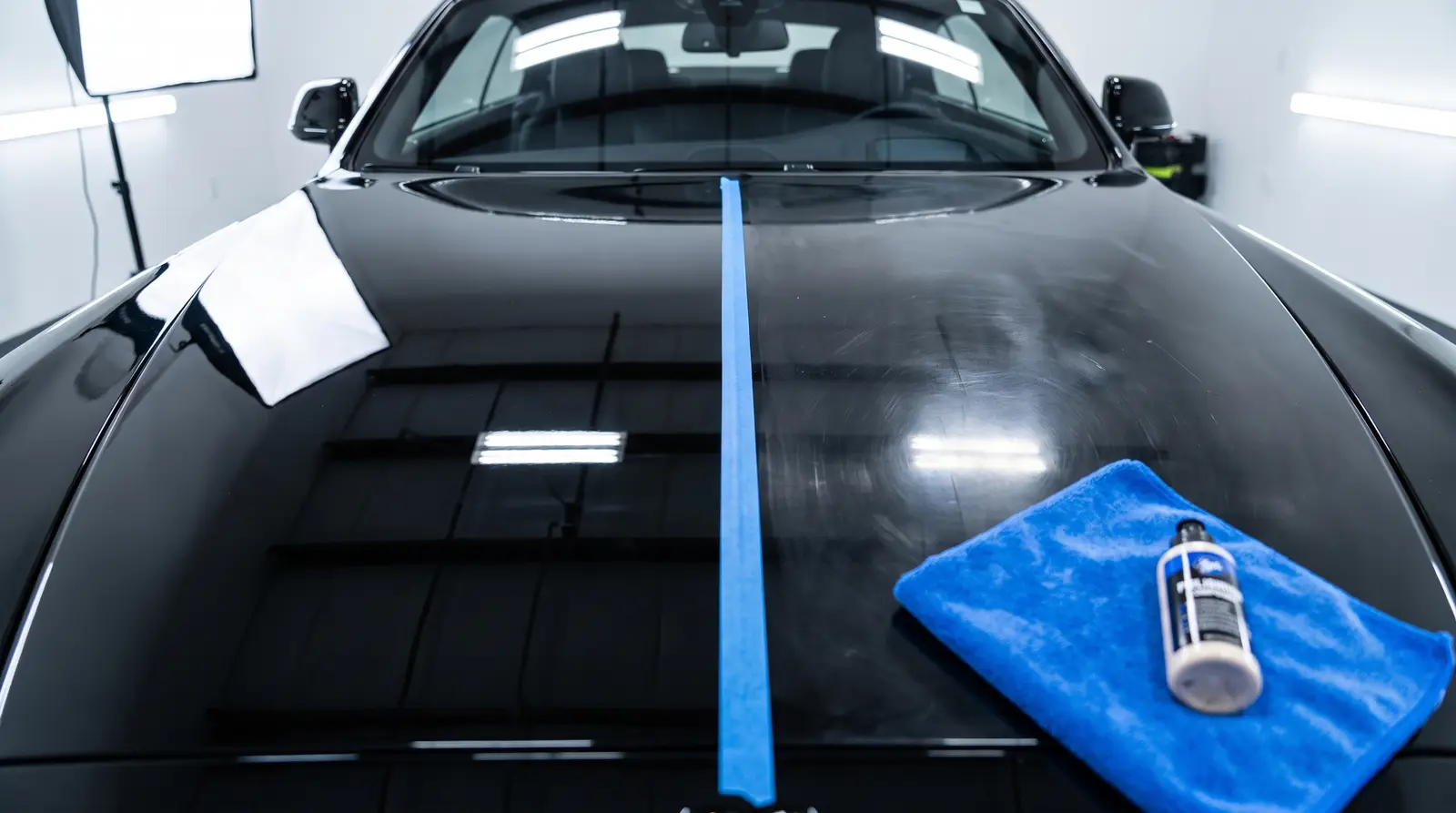
- Compound = heavy cut, removes defects, leaves haze.
- Polish = fine refine, removes haze, restores gloss.
- Multi-stage correction compounds then polishes, which is why it out-corrects single stage.
Compound and polish are the two products at the heart of paint correction, and confusing them is behind a lot of DIY paint damage. The difference is simply how aggressive the abrasive is. Compound is coarse: it contains larger, harder abrasive particles that cut through clear coat fast, removing heavy defects like deep swirls, scratches and oxidation quickly. That aggression comes at a cost, it leaves behind a fine micro-haze. Polish is the opposite: fine abrasives that remove very little material but erase that haze and bring the clear coat to a high-gloss, crystal-clear finish. One cuts, the other refines.
What compound does
Compound is the heavy lifter. When paint has serious defects, deep swirls, scratches, water-spot etching or years of oxidation, compound is what removes them, because it cuts through enough clear coat to level the damage out. On a rotary or dual-action polisher with a cutting pad, compound does the bulk of the defect removal in a correction. The trade-off is that its coarse abrasives leave the surface slightly hazy and dull, because they scratch on a micro-scale even as they remove larger scratches. Compound alone never leaves a finished look, it leaves a corrected-but-hazy surface that needs refining.
What polish does
Polish finishes the job. Its fine abrasives remove the micro-haze compound leaves and bring the clear coat to full clarity and gloss. Polish removes only a tiny amount of clear coat, so it is the safe, refining step. On light defects, polish alone can be enough, which is why a well-kept car sometimes needs only a polishing pass. But polish cannot remove heavy defects, it simply is not aggressive enough. Ask polish to do compound's job and you will spend hours making little progress on deep swirls.
| Property | Compound | Polish |
|---|---|---|
| Abrasive coarseness | Coarse, aggressive | Fine, gentle |
| Job | Remove heavy defects | Remove haze, restore gloss |
| Clear coat removed | More | Minimal |
| Finish left | Corrected but hazy | Clear, glossy, finished |
| Used when | Deep swirls, scratches, oxidation | Light marring, or after compound |
Why the order matters
In multi-stage correction the sequence is always compound first, polish second. You cut the defects out with compound, accepting the haze it leaves, then refine that haze away with polish to reveal the finished gloss. Reverse the order and it makes no sense: polishing first does nothing to the deep defects, and compounding after would just re-haze the surface you refined. This cut-then-refine sequence is exactly what defines multi-stage correction, and it is why multi-stage removes 85 to 95 percent of defects against single-stage's 60 to 80 percent.
The mistake amateurs make is reaching for compound on light swirls that only needed polish, removing clear coat they did not have to. The mistake with polish is expecting it to remove deep defects it cannot touch. Match the abrasive to the defect.
Where single-stage products fit
An all-in-one or single-stage product blends cutting and finishing abrasives into one, giving moderate cut and a decent finish in a single pass. That convenience is exactly why single-stage correction removes less than multi-stage: the product compromises between cutting and refining rather than doing each fully. For a well-kept daily driver that compromise is perfect and efficient. For heavy defects or a flawless black finish, dedicated compound then polish out-performs it every time, which is the whole reason multi-stage correction exists.
Why this matters when choosing a specialist
Understanding compound versus polish helps you judge a correction quote. A specialist who talks through cutting and refining stages, and matches them to your paint's actual defects, knows their craft. Aggressive compounding where polish would do removes clear coat needlessly and shortens your paint's correctable life. This is skilled, measured work, and it is exactly why a vetted Adelaide specialist with a paint depth gauge beats a cheap operator reaching for the heaviest compound on every car.
Matching the right cut to your paint's defects is skilled work that protects your clear coat. We connect you with vetted Adelaide correction specialists who compound and polish only as much as your paint genuinely needs. Get matched with a trusted local installer.
Get free quotes