What is paint protection film (PPF)?
Paint protection film (PPF) is a clear, flexible thermoplastic urethane layer applied over your car's paint that physically absorbs stone chips, scratches and road rash before they ever reach the factory finish. It is a sacrificial barrier, not a coating, and it is the only product that stops a flying stone from chipping your paint.
- PPF is a thick clear urethane film that takes the physical damage instead of your paint, unlike a ceramic coating which is a thin hard-wearing gloss layer.
- Modern PPF self-heals light swirls and marring with heat, and top films carry a manufacturer warranty of 10 years against yellowing and cracking.
- On Adelaide's chip-heavy commutes down the South Eastern Freeway and up into the Hills, PPF on the front end is the single most effective paint defence available.
- PPF and ceramic coating solve different problems, and the strongest builds layer a ceramic coating over the film.
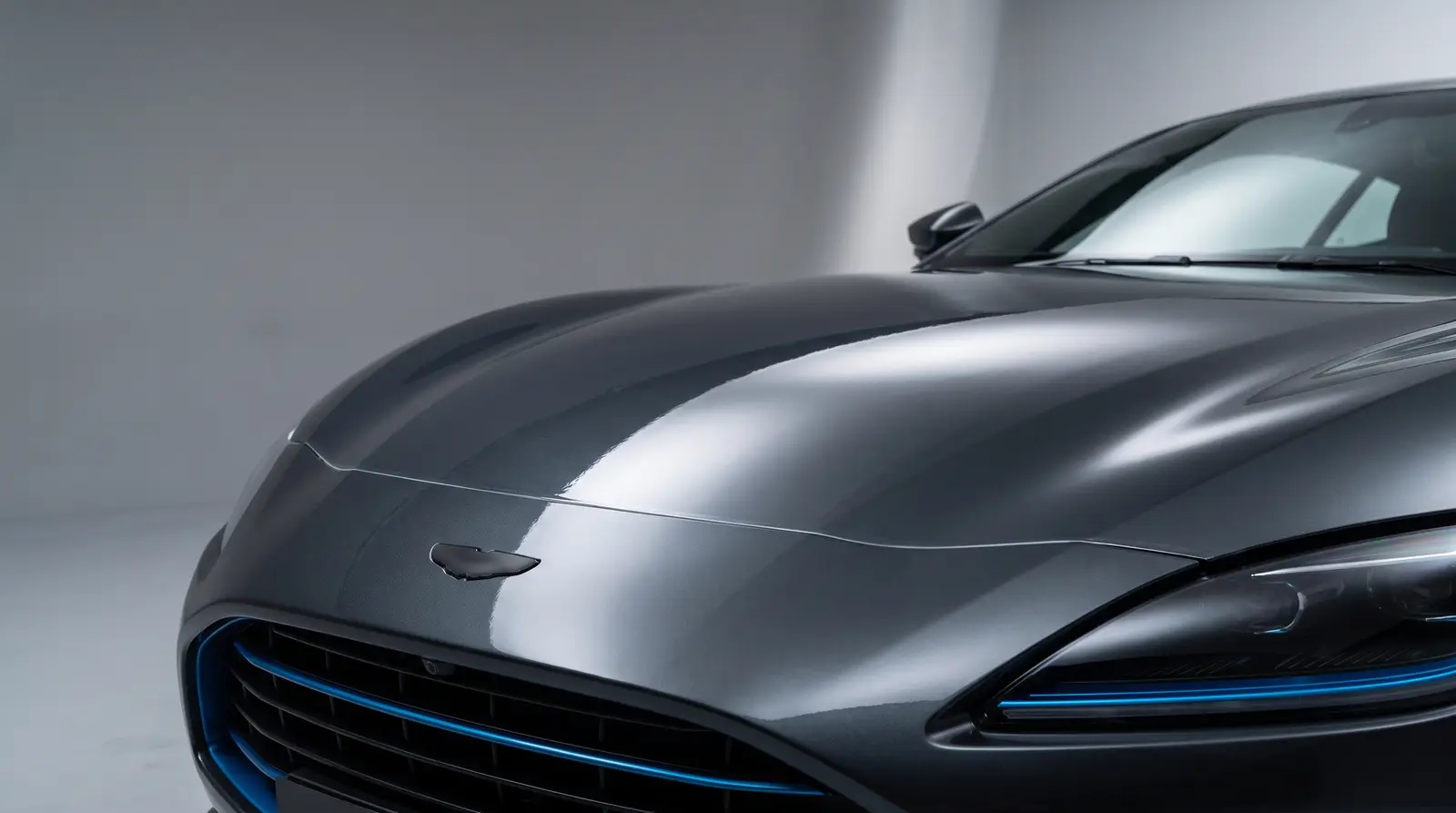
- PPF is a clear urethane film that physically stops stone chips, the one thing coatings cannot do.
- It self-heals light scratches with heat and lasts around 10 years on quality films.
- Front-end (partial) PPF is the highest-value entry point for most Adelaide drivers.
- Layer a ceramic coating on top for gloss and easy cleaning.
Paint protection film, almost always shortened to PPF, is a clear thermoplastic urethane film that is heat-formed and applied over your car's painted panels. Think of it as an invisible, sacrificial skin. When a stone flicks up off the freeway at 100km/h, it hits the film and the film absorbs the impact instead of the paint underneath. That is the entire point, and it is the one job no ceramic coating, wax or sealant can do.
The film is genuinely thick compared to anything else you put on paint. A quality PPF runs around 150 to 200 microns total, made up of a clearcoat top layer, the urethane body that does the impact absorption, and an adhesive layer that bonds it to your panel. A ceramic coating, by contrast, cures to roughly 2 to 5 microns. That thickness difference is exactly why one stops a chip and the other does not.
How PPF actually protects your paint
The urethane in modern film is elastic. A stone strike that would crack a hard clearcoat gets cushioned and spread across the flexible film, so the energy dissipates instead of concentrating into a chip. That elasticity is also why quality film self-heals: light swirl marks and wash scratches sit only in the top clearcoat layer, and gentle heat (a warm day, a hot rinse, a heat gun) lets the urethane flow back to flat and the mark disappears.
PPF defends against the damage Adelaide roads actually inflict:
- Stone chips from gravel spray, the classic Adelaide Hills and freeway problem.
- Road rash and sandblasting on the lower doors and rocker panels.
- Bug etching and bird droppings, which are acidic and etch bare clearcoat fast in summer heat.
- Light scratches from car park door dings, bushes and washing.
- Bonnet and mirror-back scuffs from insects and debris at highway speed.
PPF versus ceramic coating: they are not the same thing
This is the single most common confusion, so it is worth being blunt. A ceramic coating is a liquid that cures into a thin, hard, glossy layer bonded to your clearcoat. It delivers water beading, easier washing, chemical resistance and UV protection. It does not stop stone chips, because it is only a few microns thick. PPF is a physical film many times thicker that takes the hit. One is about gloss and cleanability, the other is about impact defence.
| Feature | Paint protection film | Ceramic coating |
|---|---|---|
| Stops stone chips | Yes | No |
| Self-heals scratches | Yes, with heat | No |
| Thickness | 150-200 microns | 2-5 microns |
| Adds deep gloss | Some | Yes |
| Easy-clean hydrophobics | Moderate | Excellent |
| Typical lifespan | About 10 years | 2 to 7 years by tier |
The strongest paint protection is not a choice between the two. It is PPF on the high-impact zones (front bumper, bonnet, guards, mirrors) and a ceramic coating layered over the whole car, film included. The film handles chips, the coating handles gloss and cleaning.
Where PPF earns its place in Adelaide
Adelaide drivers hit two chip factories constantly. The South Eastern Freeway and the roads up into Stirling, Crafers and Aldgate throw gravel and stone at your front end every trip, and unsealed Hills roads sandblast lower panels. If your daily involves either, the front of your car is getting peppered whether you notice it yet or not. Full-front PPF (bumper, bonnet, guards, mirrors) is the direct answer, and it is why front-end film is the most requested PPF job in the Adelaide market.
Coastal owners at Henley Beach, West Lakes, Semaphore and Grange have a different but real reason: salt-laden air accelerates corrosion at any chip that exposes bare metal. Stopping the chip in the first place stops the rust before it starts. In every case the logic is the same. It is far cheaper to replace a sacrificial film in a decade than to respray chipped and rust-bloomed panels.
Partial or full body?
Most Adelaide drivers do not need their whole car wrapped in film. Partial (front-end) PPF covers the panels that actually take stone strikes and delivers the vast majority of the real-world benefit for a fraction of the cost of full-body. Full-body PPF makes sense on high-value, low-depreciation or track cars where every panel is worth protecting. Getting matched to the right coverage for your car and your driving is the difference between smart spending and overspending.
Not sure whether PPF, ceramic, or both suits your car and your Adelaide commute? Get matched with a vetted local installer who will assess your panels and recommend the right coverage, no pressure. We connect you with trusted Adelaide specialists.
Get free quotesPPF is not the cheapest paint protection you can buy, but it is the only one that stops physical damage, and on Adelaide's chip-heavy roads that makes it the highest-leverage upgrade a new-car owner can make.